Wednesday, October 27, 2010

The Problem With Pork

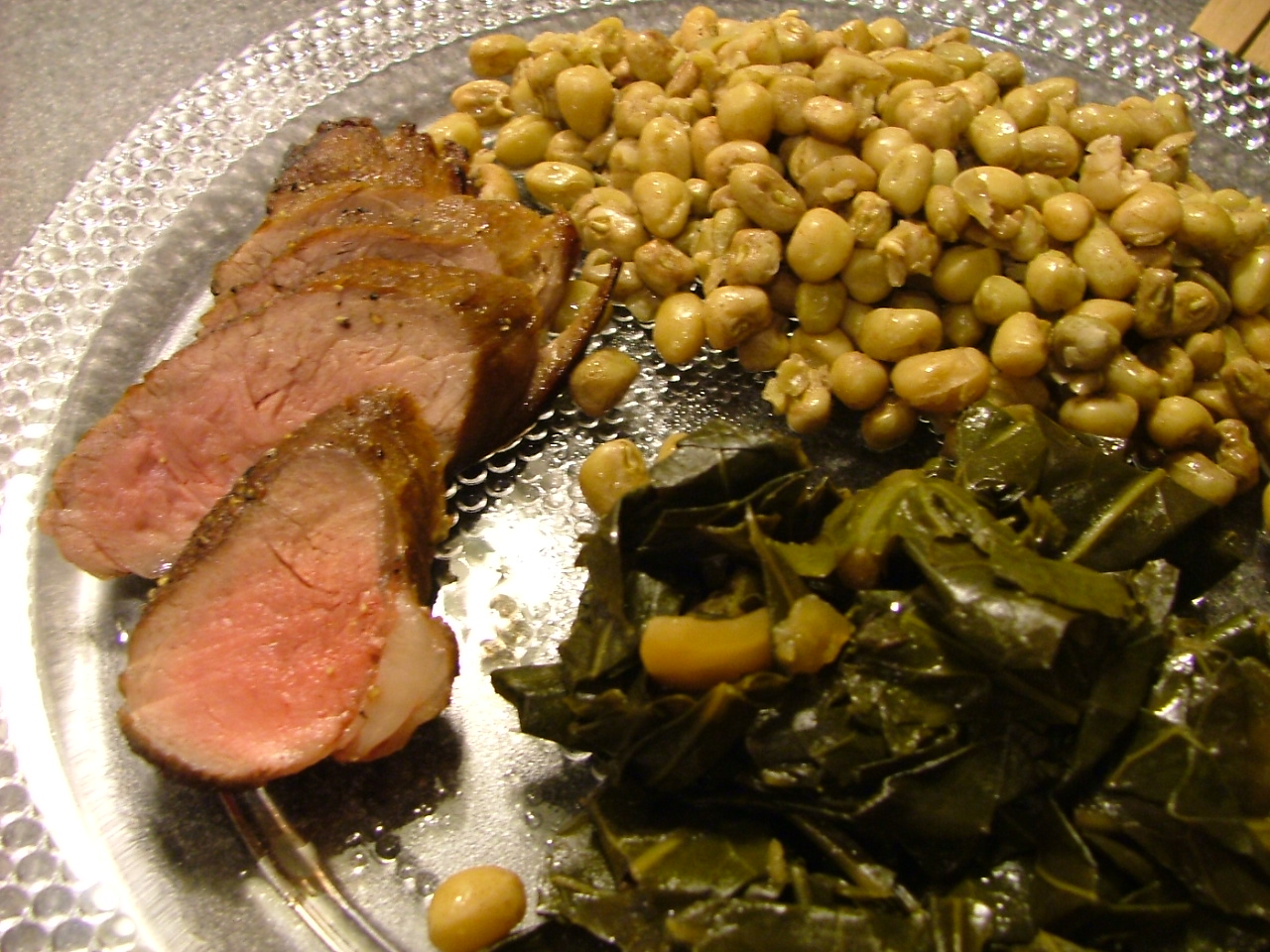
 Not a great picture... but hey, it was a great dinner. Ossabaw pork tenderloin, cooked to a rosy medium from Nature's Harmony Farm.

I'll preface this post by saying that though backed by a few factual bits, most of this post is editorial.  

Most people have had a pork chop.  Unfortunately many of those same people have had bad pork chops.  It's not the pigs fault really, or even the cook's fault to some extent, it is the sCaRy trichina worm.  Trichinella spiralis to be specific.  I along with millions of other home cooks, were raised with the thought that you had to cook pork thoroughly to kill this parasite.  It just isn't true.  Fortunately for those of you reading this, you can rest assured that I will help dispel this myth and help you cook a better pork chop.

Let me back-track a bit.  Trichinosis was at one time a more significant concern than it is today.  In decades of yore (let's say my grandparent's generation), the pigs that were raised for human consumption in factory farms were fed garbage.  Food scraps, waste from restaurants, waste from food processing plants, and other tasty bits.  Of course because they were pigs they didn't much care: if it was tasty, well then that was just fine.  Trichinosis infection in people was somewhat common.  According to my trusty interwebs netpages research, approximately 1 in 6 people were infected in the 30's and 40's.  Today the pigs are still fed food scraps, but those scraps are cooked.  Let's call it gourmet garbage, because cooked rotting beef parts and banana peel just sounds so much more appetizing.  Partly as a result of this cooking, there has been a significant drop of trichina worms in pigs raised for consumption during my parent's generation.  We'll call this the 50's and 60's.  This paragraph is where I should include a reference or two but hey, it's a blog not a research paper...  Just trust me. 

Old habits die hard.  You can't expect people to change their cooking habits overnight, things like this take time.  How 'bout we give people 60 years to rid themselves of the nasty habit of mercilessly overcooking pork?  Done... and here we are today.  Today we live in a world where pork raised in the US is virtually free of the trichina worm.  Even if the parasite was present in pork, the US Department of Agriculture says that it is killed in under one minute at a temperature of 140 degrees F.  At 140 degrees F commercial pork is often rosy pink and still relatively juicy depending on the cut, but in my experience there is a narrow window where this pork is done perfectly.  Because of the lack of fat in commercial pork, going too far above 140 F and you can end up with that dreaded, dry hockey puck.

So now we have a new problem.  While we were eliminating the parasites found in pork, we were also breeding the fat (and thus flavor) out of the meat.  The perception was that leaner is better.  The National Pork Board is proud of this fact.  They often compare it to lean poultry when in actuality pork shouldn't be all that white or lean to the point where it has virtually no intramuscular fat.  Real pork - pork with flavor - is varying shades of dark pink or red.

For a long time, pork fat was the enemy.  The rain on our pork parade.  While we shouldn't gorge ourselves on pure pig fat (please kindly disregard my previous posts on Lardo di Arnard), there is a silver lining to that porky rain cloud.  The fat in some pork, especially pastured or true, free range pork, rivals the levels of heart healthy oleic acid found in olive oil.  Doesn't sound too bad does it?  What if you heard that pork fat was lower in saturated fat than butter?  It is.  The pastured pigs found at an ever increasing number of farms dine on natural forage.  Nuts, acorns, tubers, bugs, etc.  This natural forage and the ability to roam freely (within reason of course) on wooded pasture is what lets pigs be happy and healthy.  A happy and healthy pig produces happy and healthy meats for the consumer.

Now where can you, the "average consumer" find this pastured pork?  You could take the time to drive out to a farm, talk to the folks who raised it, see the environment in which it was raised, ask a few questions, and eventually buy some pork and trek back home.  Seriously, I would recommend it - but in reality not everyone has the time or the desire to do such things.  We want convenience.  So what if that same farmer instead came to your town and delivered that pork to you?  Would that be convenient enough?  You're in luck.  How about you check out the new Farm Train from Nature's Harmony Farm.  It is an easy way to buy direct from the farm on a fairly regular basis.  Just go to the link above or visit Nature's Harmony website and enter your email address in the bottom right corner.  They will notify you of upcoming deliveries and send you an email when it's time to buy.

Go getcha some.

Oh they have chicken (and eggs), beef, cheese, lamb, rabbit, heritage breed turkeys and other meats too but perhaps those belong in a different post.

Thursday, July 22, 2010

Beer in Squirrels


Yes, I said beer in squirrels.  Just take a look at that picture for crap's sake.  In what some people (like me) could describe as the single most perfect bottle of beer for this blog, the BrewDog folks across the pond in the UK have developed the world's strongest beer weighing in at an ENOURMOUS 110 proof... 55% alcohol.  The beer is called The End of History.  Click that link to read more about it or watch the video below.  To top off this gargantuan feat, they have chosen one of the most hilarious bottling gimmicks of all time: they put that bottle of beer inside a squirrel.  As a dedicated beer drinker and admirer of all things squirrel, I will take it upon myself to buy one of these bottles of beer. 

What? What was that? You said it will cost $762 per bottle?  Maybe I'll have to save my pennies for this one, or in what some people (like me) would describe as a very generous act of kindness, perhaps those fine upstanding fellows Martin Dickie and James Watt would send me a bottle for review.  I'd be quite happy to report my findings here. 


The End of History from BrewDog on Vimeo.

I guess now is as good a time as any to tell you that my squirrel kill count is approaching a milestone - my current count is 190.

Saturday, June 12, 2010

Late Spring


Late Spring has brought with it hot temperatures and an explosion of growth in our little garden.  As I write this, today's heat index is 100 degrees... and the chilies love it.  Hopefully, here is a preview of what is to come from our little 8x8 foot garden.  This year I planted 4 tomato plants (yellow grape, black cherry, sun gold, beauty heirloom), 4 chilies (serrano, jalapeno, chile de arbol, coloro cascabella) and some herbs.  Based on the yellow grape tomato flowers (above) we'll be getting a nice bounty this year.  The black cherry tomato (below) plant is winning the race on fruit production and I hope to get some tomatoes in the next couple of weeks.  I can't wait!

Sunday, May 16, 2010

Green Market on Green Street in Roswell

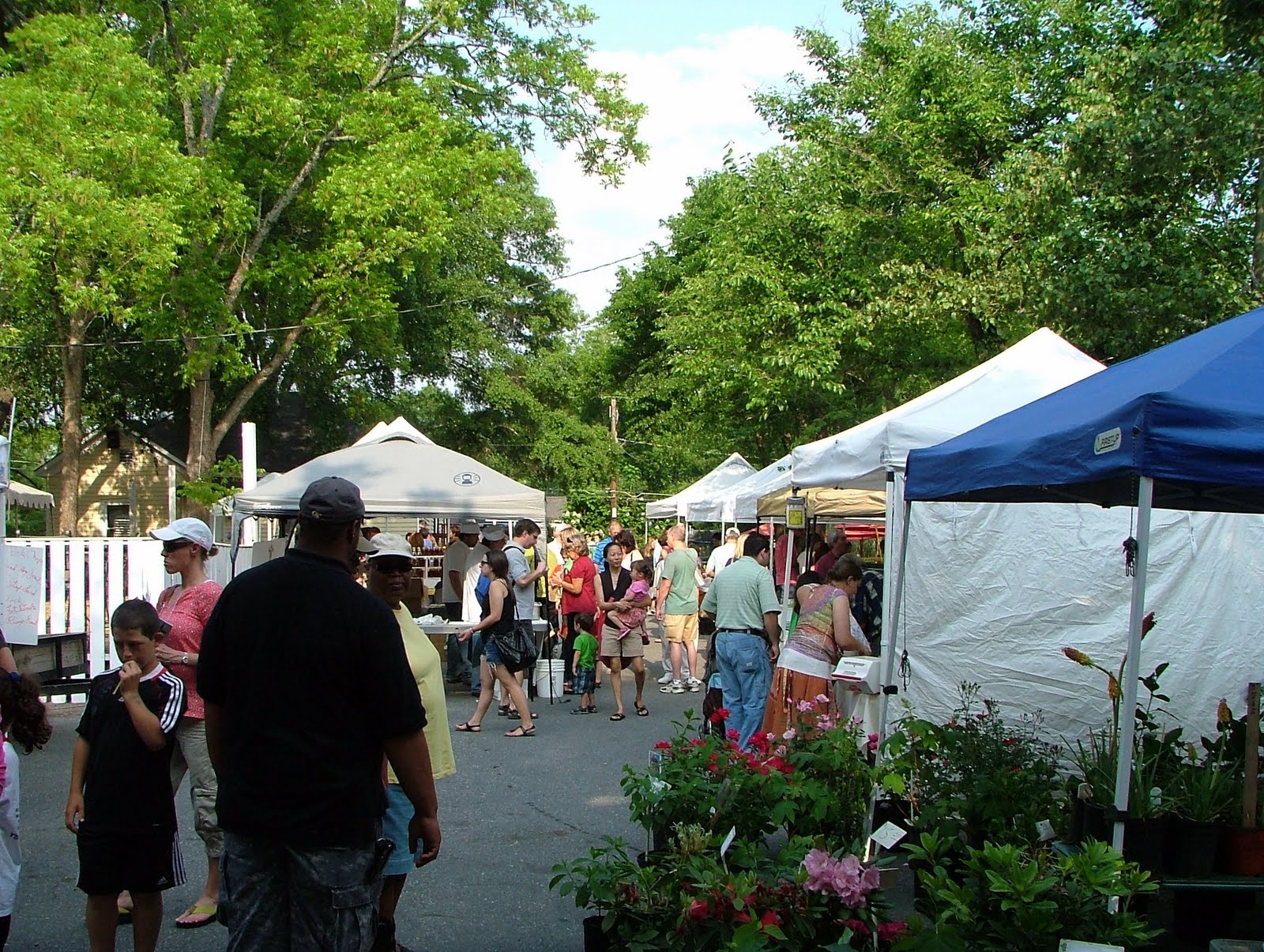
There's a new farmers market in town. The Green Market on Green Street in downtown Roswell is one of the newest markets in the Atlanta area but this past Thursday, market manager Kathy Mullen and the vendors looked like seasoned pros. The fact that the market is held on Thursday evenings makes it a great alternative to the grocery store.  It is located just off Green Street on the grounds of Swallow at the Hollow. Not only is it in a great location, easily accessible from all points of downtown Roswell, but the fact that it is located on Swallow at the Hollow property means you can grab a glass of wine as you peruse the goods.


Opening day was cheerfully busy and vendors from within a 100 mile radius of Roswell came out to peddle their produce, cheese, meats, bread, smoked trout and salmon, eggs, fudge, honey, knife sharpening skills, milk, yogurt... just to name a few. The market is hosting vendors and farmers that are organic or Certified Naturally Grown.  On select Thursdays when Alive after Five coincides with market days there will be specially themed events: 

  • May 20 - Strawberries Alive!

  • June 17 - Blues and Blueberries!

  • July 15 - HOT!HOT!HOT! - peppers and local microbreweries.

  • August 19 - Tuscany in Roswell - tomatoes, herbs, pasta and Pavarotti.


  • So if you're in the area, stop by on Thursdays from 5 to 8 PM at 1072 Green Street, Roswell, Georgia 30075.  The market will run through October 28, 2010.


    Thursday, April 1, 2010

    No More No Knead

    No knead bread was soooo 2006.  What... you still like planning 18-20 hours in advance to bake and enjoy your bread?  You like dealing with incredibly super-sticky dough?  All that and sometimes you still end up with failure.  Welcome to the future: Artisan Bread in Five Minutes a Day.  I started making this bread a few weeks ago after listening to Farmcast, a podcast from Nature's Harmony Farm.

    The process is incredibly simple.  Mix together some flour, water, salt and yeast and let it sit on the counter to rise for about 2 hours.  In this regard it is similar to the no knead method (no kneading required).  After that cover it, refrigerate it, and use it within 2 weeks.  2 weeks!  How awesome is that?  

    Here's where the "5 minutes" part comes in: whenever you want some bread (say when you get home from work) take the dough from the fridge, cut off a grapefruit sized chunk, quickly form it and plop it on a pizza peel sprinkled with corn meal.  It takes about 5 minutes (get it?).  What do you do with the rest of the dough?  Put it back in the fridge of course.  You'll get about 4 loaves of bread from the master recipe.

    Let the dough rest for 40 minutes on the pizza peel and preheat your oven to 450 with a stone on the top rack and a broiler pan underneath.  After 40 minutes, slash the dough with a serrated knife, slide it onto the stone, and pour about a cup or so of water into the broiler pan.  Careful, you're going to get lots of steam so don't burn yourself.  30 minutes in the oven and you get this... 


    I won't reprint the recipe here, but the master recipe that I've described above can be found in the book Artisan Bread in Five Minutes a Day: The Discovery That Revolutionizes Home Baking or you can find it reprinted with permission on the web.  I suggest looking at these websites, The Global Gourmet, or Mother Earth News.  I don't see the need to ever make no knead bread again.

    Monday, March 29, 2010

    Lardo di Arnad: Part 2

    Back in late December I started the process of curing a hunk of fatback from what I later determined to be an Ossabaw hog.  The fatback came from Nature's Harmony Farm of course... would you expect anything different at this point?!  Originally I was going to cut the fatback into smaller pieces to make lard, but Jason who I'll call an expert on the subject of curing meats, suggested that I make Lardo di Arnad.  So I did.  
    The process was relatively simple: boil some water, dump in some salt and spices and, once it was cool, toss in the hunk of fatback.  I guess the hardest part was waiting the 3 months for it to cure.  The result?  At first I must admit I was skeptical.  The water had turned a dark brown (see above) and it smelled quite strong.  Kind of like spices sitting in salty water for 3 months with a hunk of fatback.  So I cut off a piece, toasted some homemade bread and laid thin slices of the Lardo di Arnad on top of the hot toast to partially melt (see below).  Holy crap this is good stuff.  Salty, silky, and hugely flavorful with a wonderful pork flavor.  I'm quite pleased with the results. 
    So far I seem to be the only one in this house who eats the stuff... and I've got lots.  Come on over and try some.

    Monday, March 15, 2010

    Hog Butchering Class at Nature's Harmony Farm

    Early Saturday morning I set out on a day trip to Elberton, Georgia to visit friends and farmers Tim & Liz Young at Nature's Harmony Farm.  This visit was quite different from past visits: this day we butchered half a Berkshire hog raised on the farm!

    When I started telling people about the event, their visceral first reaction was to think we were actually killing the hog.  This was not the case; the killing was done a couple days prior to our arrival to allow for hanging time and minimal processing like removing hair, taking out the internal organs and bisecting the hog into two halves.  Below is the half hog just before we started.
    The class began with lessons on how to render lard, how to make bacon, and how to use some of the less-used cuts of pork like the head.  Tim explained the simple curing process for bacon and then we sawed off the hocks, all of which were placed in the smoker.  Liz then showed us how she took the head to make porchetta di testa: a deboned, rolled, and cooked pig's head.  Of course they were nice enough to share and we were more than happy to taste test.  Everybody likes bacon, but the real treat was the porchetta di testa - good job Liz!
     Removing the hock
     
     Tim putting cured pork belly in the smoker to make hickory smoked bacon.

    For more information on porchetta di testa, check out the video below.


    Around noon we took a break for a farm tour and a quick bite to eat, then class resumed - now it was time to get down and dirty.  There are a few different schools of thought on what constitutes a section or primal of a hog, but today we focused on three sections: the shoulder, the loin and belly, and the ham.  These primals are further broken down into smaller cuts that are more recognizable: the shoulder was separated into the Boston butt and the picnic ham, the tenderloin was removed, the loin was sliced into chops, and while most everyone will recognize a ham, we cut into ham steaks to fairly distribute the meat among the 8 attendees.  Enjoy a few pictures.
    Check out video that Tim and Liz put together of the day's events.


    The class was really fantastic.  While most of us were generally familiar with what cuts come from what part of the pig, actually breaking down this half of a hog was an amazing learning experience.  There are several more classes this year that include chicken, lamb, and turkey butchering, as well as meat curing and cheese making classes.  Details are here if you're interested. Thanks Tim & Liz!

    Tuesday, February 2, 2010

    Pilgrims & Oysters


    Call it a pilgrimage.  On the way back from a Lake Tahoe ski trip last week, I convinced my car mates to make a slight detour to see Thomas Keller's The French Laundry. We didn't have the time, nor did we have the cash to actually make it inside for dinner (4 people for dinner would have cost over $1,000), but it was a fun detour through Napa, Yountville, and then on to Sonoma. While we were there I ran into Culinary Gardener, Tucker Taylor tending to the garden with vegetables grown specifically for The French Laundry's kitchen.  Pretty sweet deal.  Tucker was at one time based in Atlanta at Woodland Gardens.  His stall at the Morningside Farmer's Market every Saturday was always packed, often with a line of 10 people or more waiting to buy some prized tomatoes.  Tucker was nice enough to let us walk through the garden and see the sights.

    The Napa Valley scenery was really nice. To be honest it's really all I care to see in Napa.  I've been on one wine tour in my life and from what I've heard, I've seen it all.  Usually you're shown the vineyards (we saw them) then you're shown the storage tanks/barrels (didn't see them), and then you're shown to the buy-some-room, I mean tasting room.  We can get Napa wines here in Atlanta for what is likely the same price if not cheaper when you add in shipping costs.  So what did we miss out on by not touring any vineyards?  We didn't see any wine barrels.  OK I take that back, I saw a tractor-trailer full of new oak barrels driving down the road.  So there you have it: the fastest, and cheapest visit to Napa Valley of anyone I've ever met.  Here's a pretty picture from the car.


    From there we drove west through Sonoma (just about the same as Napa) towards Point Reyes National Seashore.  Culinarily speaking, I think Point Reyes is most famous for it's Point Reyes Blue Cheese but our immediate goal was to see the picturesque California coast.  We certainly saw it and it's monster waves.  The picture below doesn't do justice because there is no scale, but these were some pretty big waves.  After wave watching we stopped for lunch at Priscilla's Pizzeria & Cafe in Inverness, California. Despite the name of the place I had some really good oysters from Drakes Bay Oyster Farm - just up the road by about 2 or 3 miles.  6 raw and 6 BBQ oysters is what I ordered and they were really fantastic.  These oysters were monsters with a deep bottom cup shape to hold all that liquor.  Fantastic.

    When we arrived in San Francisco we were about pooped, but dinner was still to be had at Zuni Cafe: a well established standard for Californian cuisine in the city.  Dinner was great but I think the Ferry Building Farmers Market the next morning was more exciting.  From cheese, to meats, to bread, to an incredible spread of vegetables, it was a fantastic market.  I had a breakfast of Blue Bottle Coffee, sourdough bread from Acme Bread Company, and oysters from Hog Island Oyster Company.  The beauties below are Kusshi (smaller, on the right) and Chelsea Gems (larger, on the left).  I haven't had oysters like these in probably 10 years.  Cold, crisp, and sweet is the best way that I can describe them.  If you don't like raw oysters after trying these, you're a sissy.

     
    Ferry Building Marketplace
    Overall, the trip was great.  From the snowy slopes at Heavenly and Squaw Valley, to the West Coast cuisine with it's great looking produce and pristine oysters, it is a great area of the country.

    Thursday, January 7, 2010

    Squ-EEL-ing Good Dinner


    Most people hear the word "eel" and get scared.  I think dinner.  Perhaps people's first experience with eel is at sushi restaurants?  They see eel mentioned on a sushi menu and they immediately picture a slippery, slimy thing that squirms and swims around in deep, dark, scary water!  People who think that are partially correct - it does swim in water - but in the simplest terms an eel is just a fish.  In fact, all eel served in sushi restaurants is cooked (which means it is not raw, for those just starting out) so you can ignore any fears you have about raw fish.

    Maybe you decide you don't care if it's cooked or not, you just don't want it... you'll have some "other" fish.  That's fine, but realize that eel is a nice, firm fleshed white fish with good flavor.  That flavor is enhanced even further when you pour or brush kabayaki sauce (also known as eel sauce) all over it and heat it up.  The dark, sweet & salty kabayaki sauce is what makes the eel look brown and glossy, just like in the picture above.  Kabayaki sauce is kind of like an Asian BBQ sauce: soy sauce, some sugar, sweet rice wine (mirin) and that's about it.  It would be great on salmon or even chicken too, just pick up a bottle next time you're at an Asian grocery store.  After all, most people like soy sauce, lots more people like sugar, and then you throw in some rice wine to top things off.  It's quite tasty.

    So eel over rice was our dinner last night.  I simply pulled the pre-cooked, pre-sauced eel out of their vacuum packaging and broiled them in our oven for about 3 or 4 minutes per side.  Served over rice with some sauteed shiitake mushrooms, radish sprouts, and green onions, it was quite nice.  Try it next time you're out at a sushi restaurant.

    Monday, December 21, 2009

    Lardo di Arnad

    Below is a large hunk of skin-on fatback from either a Ossabaw or a "Crossabaw" (cross between a Ossabaw and Berkshire) from Nature's Hamony Farm.  Originally, it was destined to be rendered and turned into lard.  That was until a fellow poster at 285 Foodies suggested I should make Lardo di Arnad... I agreed.


    So I have started the process which is really pretty simple.  According to Jason's instructions, I took 1 liter of water and brought it to a boil.  I used a bottle of spring water just to keep all the flavors super-clean.  Once the water boils, add 300 grams of salt and stir until dissolved.  Add in a hefty dose of herbs and spices and let the mixture steep until it is completely cool.  Here I have used about 8 grams of rosemary, 2 cloves of garlic (crushed), 7 juniper berries (crushed), a tablespoon or so of black peppercorns, 7 sage leaves, 6 whole cloves, 3 bay leaves, a stick of cinnamon, and a few small stems of thyme.  Once cool, pour the brine over the fatback and refrigerate... for a long time.  From here, time does the work.  Jason instructed to leave the fatback in the brine for 3 months, turning once a month, making sure everything is submerged.


    So, you have 3 months to figure out what Lardo di Arnad is.  In 3 months (late March) I'll post again and of course show you the finished product.  Below is the fatback in the brine.


    Wednesday, December 16, 2009

    Terrapin's Hopsecutioner


    Terrapin's newest addition to their year-round selection of brews: Hopsecutioner IPA. It gives new meaning to "killer" IPA... get it? Executioner? Never mind.

    This beer is rumored to be one of the most expensive beers that Terrapin makes. Hops tend to be quite expensive and the mix of 6 kinds of hops including Warrior, Chinook, Centennial, Simcoe, Amarillo, and dry hop finish of Cascade certainly make that rumor believable. Aside from the hops this beer has a hefty backbone of malt and it makes the finish less bitter and more sweet and floral. At least that's my best guess while drinking my first glass ever. With that said it does ring in at 78 IBU's so it's still a potent IPA for those who like the hop.

    The beer is a nice dark amber color and is quite viscous which makes for a nice mouth feel. This isn't a chugging beer. Congrats to Terrapin on their new brew. I'll be sure to partake often.


    Hopsecutioner

    Thursday, December 3, 2009

    Milling About


    If anyone has stepped into a mid-scale restaurant somewhere in the South over the past several years you have probably come across the name Anson Mills. For those of you who have not - time to get out more... or time to pay more attention to the menu. Though I have had Anson Mills products sparingly over the years at restaurants, this is the first time I've mail ordered anything from them.

    To give a little background, Anson Mills is a producer of heirloom organic grains, legumes, and flours located in Columbia, South Carolina. They have products like oats, beans, rice, farro, cornmeal, etc. Yes, I'm going to make fancy grits. What makes Anson Mills special is first, the flavor that is achieved first by using only heirloom varieties of vegetables and plants and second, they grind everything to order and ship the very same day in frozen, insulated containers. Because they are just over the border there in S.C. regular ground shipping is basically the same as overnight. Shipping costs aren't too bad, I ordered 6 bags of various items and the total (with shipping) was just under $50.

    Below is our first order of Anson Mills products and I'm positive it won't be the last. Please check out their website; they have a great deal of information, history, and recipes designed specifically for their products.

    Saturday, November 21, 2009

    Our 2009 Heritage Thanksgiving Turkey from Nature's Harmony Farm

    Toms Struttin'

    Earlier today we drove to Elberton, Georgia for another visit to Nature's Harmony Farm. Tim & Liz Young hosted turkey buyers from around the southeast for their second annual Turkey Harvest Day on the farm. As always it was great to see Tim, Liz and all the animals they have there.

    We began with our electric alarm clock going off at about 7:00 am as opposed to the call and response of the farm's roosters at 4:30 am like last month. When we arrived after our 2 hour drive from Roswell, the Young's had music, cider, farm tours, and of course the guest of honor: heritage breed turkey. We picked out a 14.2 pounder which should be more than enough for the people we're feeding this year. Below are some pictures from our farm tour.

    Toms & Hens

    Now, why buy a heritage breed turkey versus a regular super market turkey? There is plenty of information out there on heritage breeds versus broad breasted white turkeys, but I think this New York Times article "About A Bird" from 2003 is a very good read. Please take the time to read it if you have not before; it will make you think twice about buying that supermarket turkey next year.

    Aside from the ethical reasons, I think heritage breed turkeys simply taste better. I like to cook and whenever possible I seek out ingredients that are of the highest quality, especially for occasions like Thanksgiving. The meats from Nature's Harmony Farm certainly fulfill my needs. The turkeys, and all the animals at the farm, are pasture raised on grass where they are free to run around, scratch at the ground, and live a life that mimics nature as closely as possible.

    For those of you who did buy a heritage breed turkey and now you're wondering how to cook it... be aware that these turkeys cook FAST. Last year we had a 13 pound turkey and it was in and out of the oven in about 1 hour and 15 minutes with an oven temperature of about 450F degrees. These birds are built very differently than a broad breasted white: the breast is much taller and elongated, and the legs and thighs are much bigger. That's what happens when a bird runs around on the farm as opposed to being cooped up in a poultry house. We followed this recipe which is similar (if not exactly the same) to the one Tim gave us when we picked up our turkey last year. Part of the reason that the turkeys are done sooner is because they are done at a lower temperature - or at least what is perceived as a lower temperature. I removed our bird from the oven when the thigh meat registered 150F degrees, and it probably should have come out at about 145F. While this might sound low, you have to take carry-over cooking into account which will take the bird into the 160+F degrees range. And, if you follow the USDA guidelines on cooking turkey you should only cook your standard grocery store bird to 165F degrees - not too much difference. The days of cooking turkey to 180F degrees are over, and whatever you do, DO NOT EVER use the plastic pop-up timer to determine the turkey's doneness. Your best tool for keeping track of the turkey's temperature is a probe thermometer.

    So while it might be a little late to seek out a heritage breed turkey for this Thanksgiving (Nature's Harmony takes deposits and sold out months ago) keep an eye out for next year, I think you'll be pleasantly surprised with the taste and you just might feel a little better about what's on you plate.

    Mom & Piglets seen on the tour.

    Monday, November 9, 2009

    'Avec Eric' with Eric Ripert


    If you love watching cooking shows perhaps, like me, you've switched your allegiance from Food Network to your local PBS station. Filled with great ideas and cooking information, our Atlanta affiliates (we have 2) air a near constant onslaught of shows every Saturday afternoon. One of the newest shows to be picked up here in our Atlanta market is Avec Eric with Eric Ripert. Ripert, the silver haired seafood genius of Le Bernardin in Manhattan is the host. The show is simply fantastic. Focusing on not only seafood but other ingredients as well, Ripert guides us through places like Italy, California, and New York to see how recipes are developed in Le Bernardin's kitchen. Be sure to take a minute and check out this gem of a show... if you're busy there's always your DVR.

    Thursday, November 5, 2009

    Manhattan Dining


    A couple weeks ago Liv and I spent a long weekend in Manhattan by traveling around to various New York landmark restaurants filling our stomachs and draining our wallets. It was a great way to celebrate anniversary #1. Aside from the draining our wallets part.

    Thursday

    After arriving on Thursday mid-morning we walked around Times Square to see the lights and the sights. It was our first time in the city so there was lots of standing and looking up for the first few minutes. I was surprised at how big Diddy is in real life. Before long it was time for lunch. I had picked out a very casual lunch spot because I knew we were going to be out and about. Kwik Meal #1 it was. The cart is known for it's marinated lamb served in a pita. The lamb was incredible. It had everything you want in a good lamb gyro plus more. This wasn't pressed and pre-formed mystery lamb meat, this was well seasoned and topped with tangy yogurt sauce. Excellent.

    After lunch we walked some more, checked out Central Park and the subway system and before long it was time to check in to our hotel, relax and get ready for dinner at Momofuku Ssam Bar. When we walked into Ssam Bar, it was evident we were in for a loud dinner. Not to worry though, if Heston Blumenthal and Ruth Reichl were able to handle it, so was I. That's right, a couple of professional super-foodies were in attendance that night.

    We walked straight in at about 7:30 and got a couple seats at the bar. The menu is changed daily but there are some standards that have gained enough popularity to earn at least a semi-permanent spot on the menu like the steamed pork buns. David Chang, the brainchild behind the Momofuku family of restaurants is of Korean descent so while the menu has many Korean-Asian influences it is by no means a Korean restaurant. Our dinner was (from the menu descriptions: steamed pork buns (pork belly, hoisin, cucumbers, scallions), fried brussels sprouts (fish sauce vinaigrette, mint, delfino), montauk skate (old bay fingerling potatoes, spicy aioli, preserved lemon), and crispy pig's head (sauerkraut, pear mostarda). The pork buns were fatty and soft with an explosion of deep porky flavor. If you have any reservations about pork or fat, stay away -for all others, this is piggy heaven. The brussels sprouts were great too if a little bit greasy. The vinaigrette and the mint played nicely with this little snack and helped cut the fryer grease that inevitably was caught in the folds of the sprouts. The crispy pig's head was shredded pig's head meat formed into crab cake size cakes, breaded and fried. Again, if you're hesitant... if not, piggy heaven. The skate was also quite good. The spicy aioli really worked well with the potatoes and the few fork-fuls I snagged of the skate were fresh and light.

    Dessert? Well how about we walk to the adjoining Milk Bar? We did. This is where the indulgence in pork turns to indulgence in cookies. We opted for a chocolate chocolate something or other, a cornflake chocolate chip marshmallow, and the famous compost cookie (the name is now trademarked). The compost cookie has pretzels, potato chips, coffee, oats, butterscotch, and chocolate chips. Amazingly good and it was clearly the best of the 3. The salty and sweet cookie was a smack-your-face-and-hope-you-have-a-glass-of-milk revelation. As visions of pork buns & cookies danced in our heads, off to bed we went. Great first day.

    Friday

    Friday morning started with a visit to the Statue of Liberty. We reserved crown view access and despite the overcast day it was well worth the extra $3 to be able to climb to the top. The stairs were not hard to climb but they were very steep and very narrow. I'm not a huge guy but my shoulders were nearly touching both sides of the stairwell as we climbed up. The view from the crown was great even though there were a few clouds off in the distance.


    For lunch we were off to the famous Katz's Deli. You know, the orgasms and movie place. Based on the movie clip, the place hasn't changed much. Of course I ordered a pastrami on rye with mustard. While it was certainly good, the place seems more like a tourist destination than a food lover's hot spot. Liv was unhappy with her egg salad sandwich. I'm glad we ate here but I probably won't seek it out in any potential future trips.


    Friday night we saw a hilarious God of Carnage show with a few names you might recognize if you've ever seen The Sopranos or Dumb & Dumber. The play won the 2009 Tony Award for the best play and for good reason. The acting was superb and the laughs kept coming.

    After the play we were off to Locanda Verde. Chef Andrew Carmellini heads up this Italian gem in the Greenwich Hotel. We started with the highly lauded blue crab crostino with jalapeno and the burrata with peppers and fried rosemary. The crab is piled high and was super-fresh. The jalapeno gave a slight kick but didn't sear any taste buds. Excellent starter. The burrata sprinkled with crunchy salt and fried rosemary was a milky-cheesy godsend. If you've never had burrata, seek it out. It is incredible. After the apps I had the braised veal cheeks served over risotto milanese. The veal was tender and had a glazy, rich, succulent coating that makes your lips stick together. Everything you want in a great braised dish. Liv had a broccoli rabe sausage served over fagioli beans. Hers was good but I certainly liked mine better. However the real surprise was dessert. We chose the "La Fantasia for Two" and it was a big bowl of pumpkin gelato, brown butter gelato, apple cider granita, caramelized apples, and cinnamon sugar croutons. Wow. Paired with a fantastic recommended amaro by our waiter, the desert took our meal to the next level. The crutons were crisp despite being soaked in melted gelato and the apple cider granita was the crisp and cold yin to the brown butter gelato's yang.

    Saturday

    After getting a phone call on Saturday morning I was told that our childhood cat, Tinkerbell, had been put to sleep earlier in the morning (she was 20 1/2 years old). I was in need of some cheering up and NYC pizza was my medicine. We met my cousins Lindsay and Jennifer who live in the the city (albeit in different boroughs) at Luzzo's pizza. Nice place for a beer and some of the best pizza ever - great for cheering up! The restaurant has a "grandfathered" coal burning oven that has been around for 107 years. The pizza crust was crisp yet moist and held the topping of bufala mozarella wonderfully. Add in a couple Peroni's and I was good to go. We didn't gorge ourselves on pizza today because we were headed to Babbo for dinner.


    Babbo, the powerhouse restaurant from Mario Batali and Joe Bastianich, is one of the most popular restaurants in the city, and for good reason: our dinner was nothing short of fantastic. Reservations are taken 30 days in advance to the numerical date and if you don't start calling at 10 am you better not get your hopes up. It took me about 15 minutes of dialing on 2 phones simultaneously, non-stop to get through for our Saturday night dinner. I ended up with a 6:30 reservation which at first seemed a tiny bit early, but after we left the restaurant at about 9:45 it was clear that the 6:30 time was perfect. Back to the food, we chose the 8 course pasta tasting menu (see the menu below) along with the wine pairings. The pasta was amazing and the wine pairing put every course waaaay over the top in a good way. Kudos to Marla Priest, the sommelier. If you make it to Babbo and try this tasting menu, do not hesitate to order the wine pairings. I think our favorite was the garganelli with "funghi trifolati." The hand rolled pasta accented with porcini mushrooms, parsley and a light butter sauce was like nothing I've had before. One of the best meals I've ever had.


    Sunday

    Sunday was bittersweet because we knew it was our last day. We woke up and went searching for a brunch/snack. Knowing that Hell's Kitchen wasn't far we walked to Sullivan Street Bakery and picked up a croissant, and a "cubano" a cuban sandwich with an awesome garlic aioli & cheese and a San Pellegrino Aranciata. You've never heard of Sullivan Street Bakery? I bet you have... no knead bread anyone? After more walking around on what was undeniably a beautiful fall afternoon in Central Park, it was about time to go home.

    New York is certainly a fantastic culinary city, but looking back I know we only scratched the surface. There's so much to do and see that a long weekend is no where near long enough.